


People arrive in Copenhagen expecting a clean, orderly Scandinavian city. That part is accurate. What catches most visitors off guard is how much personality the place has. If you are planning a trip and mapping out things to do in Copenhagen, the honest answer is that the list runs longer than the city’s modest reputation suggests. Canal districts that stop you mid-step. A food scene with more Michelin stars per capita than almost anywhere in Europe. Neighborhoods that feel completely different from each other yet sit ten minutes apart by bike. And pastries. The pastries alone justify the flight.
This guide covers what to actually do in Copenhagen Denmark, where to eat, and where to stay depending on how you travel.
Things to Do in Copenhagen: The Main Attractions

Nyhavn
Nyhavn Copenhagen is the image most people carry in their heads before they arrive. The row of 17th-century townhouses in red, yellow, and ochre along the canal. Old wooden ships moored at the quay. Tables outside every restaurant from April through October.
It was originally built as a commercial harbor in 1670 and spent a few hundred years as one of the rougher parts of the city before the restaurants moved in during the 1970s and the mood changed entirely. Hans Christian Andersen lived here at various points in his life.
It is touristy. That is the honest answer. But the canal boat tours depart from here and the walk along the quay on a clear morning, before the day groups arrive, is genuinely one of the best free things to do in Copenhagen. Come early. The light at 8am on the painted facades is worth getting up for.

Tivoli Gardens
Tivoli opened in 1843 and is the second oldest operating amusement park in the world. More than four million people visit each year. It sits in the center of the city between Copenhagen Central Station and the Indre By district, which means you can walk in from most hotels in under 10 minutes.
The park is more than rides. The gardens, the restaurants, and the live music make it worth visiting even without going on anything that moves fast. The fireworks on Saturday evenings in summer are worth timing a visit around. In December, the Christmas market at Tivoli is among the best in Scandinavia.
Buy admission tickets in advance to skip the gate queues. Ride tickets are separate from general admission.
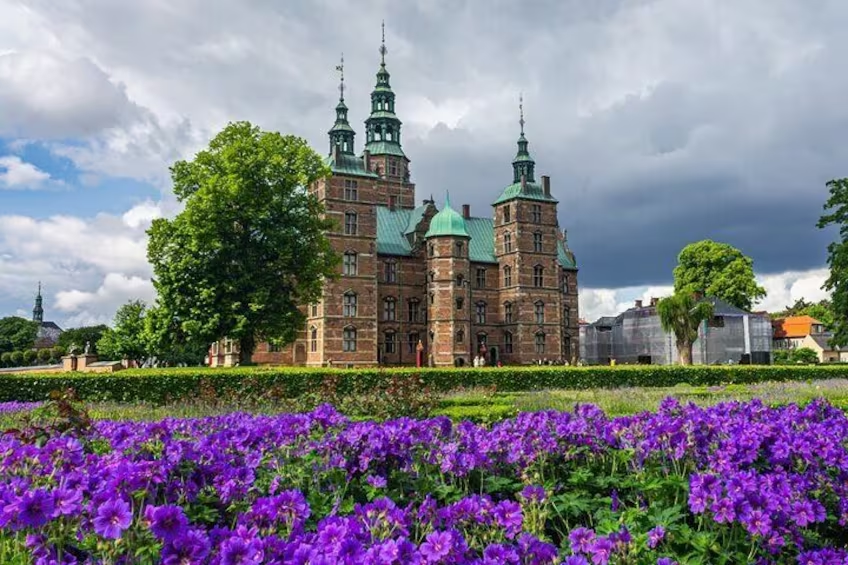
Rosenborg Castle and the King’s Garden
Rosenborg Castle is a Renaissance castle built between 1606 and 1633. It now houses the Danish Crown Jewels and original rooms packed with furniture, paintings, and objects from four centuries of royal history.
The surrounding King’s Garden, Kongens Have, is the oldest royal garden in Denmark. In summer, locals come here to sit on the grass and have lunch. In any season the garden is worth walking through even if you skip the castle interior. Entry to the garden is free. Castle admission is around 160 DKK for adults.

The Round Tower
Built in the 17th century, the Round Tower is Europe’s oldest functioning observatory. Access to the top is via a wide spiral ramp rather than stairs because horses used to haul carts of books up to the university library that once occupied the summit. The view from the platform at the top covers most of central Copenhagen.
Entrance costs 40 DKK. Open daily from 10am to 8pm in peak season. One of the more underrated things to see in Copenhagen because most visitors walk past it and miss a genuinely good view.

Amalienborg Palace
Amalienborg is the official residence of the Danish royal family. Four identical rococo palaces arranged around an octagonal courtyard. The changing of the guard happens daily at noon in the courtyard and is free to watch.
Two of the four palaces are open to the public. One has a museum of Danish royal history spanning nearly 400 years. The other allows visitors into the actual residential rooms. Worth an hour.

Christianshavn
Just across the bridge from Nyhavn is Christianshavn, which by local consensus is the most beautiful neighborhood in the city. Canals lined with old buildings, houseboats, small cafes, and a pace that is noticeably different from the busier areas north of the water.
Walk the Christianshavns Kanal and give the neighborhood at least two hours. It holds up well against Nyhavn without the crowds.
Canal Tours
A canal boat tour is one of the best ways to understand Copenhagen and is especially useful on a first visit. The 50-minute tours depart from Nyhavn and Gammel Strand and pass the Opera House, the Royal Library, Christiansborg Palace from the water, the houseboats of Christianshavn, and the harbor entrance.
Stromma and Nettobadene both run English-language tours throughout the day. Prices run from 8 to 19 euros for adults. Book in advance from June through August.
Torvehallerne Food Market
Torvehallerne is a covered food market near Norreport Station with around 60 stalls selling fresh produce, specialty food, coffee, and ready-to-eat dishes. It is genuinely good and not aimed purely at tourists.
The smorresbrod stalls here are worth a stop for a traditional Danish open sandwich at lunch. The coffee roasters in the market are some of the best in the city. Saturday mornings are the busiest and the most alive.

The Black Diamond
The Black Diamond is the extension of the Royal Danish Library, a striking black granite building on the waterfront that reflects the harbor. The interior is open to the public. Reading rooms and exhibition spaces are free to visit. The building alone is worth seeing from the outside on any canal tour or harbor walk.

Kastellet
Kastellet is a 17th-century star-shaped fortress on the northern harbor edge of the city. It is still partially in military use but functions mainly as a public park. The moated grounds, the old buildings, and the views over the water make it a good 30-minute stop on a harbor walk. Free to enter.
Best Restaurants in Copenhagen
Best Restaurants in Copenhagen
Food in Copenhagen settles in quickly. You notice it after the first proper meal. It is not rushed, not overly styled, just thoughtful in a way that makes you slow down without trying. That is what defines the best restaurants in Copenhagen. They are not all built the same, but they all leave an impression that sticks beyond the plate.
Alchemist
Alchemist is where Copenhagen pushes dining into something more immersive. The experience moves through a long tasting menu, with each course arriving in a way that feels deliberate. It is not just about flavor. It is about pacing, atmosphere, and attention to detail.
This is the kind of place you plan ahead for. If you are looking for fine dining in Copenhagen that feels different from a typical restaurant visit, Alchemist is the one people remember most.
Schønnemann
Schønnemann brings things back to tradition. This is where you go for smørrebrød and classic Danish lunch done properly. The setting feels old-school in a good way, and the food reflects that same consistency.
It is one of the best spots in the city for traditional Danish cuisine. Simple ingredients, balanced flavors, and a calm dining experience make it stand out without needing to try too hard.
The Olive Kitchen & Bar and Maple Casual Dining
The Olive Kitchen & Bar and Maple Casual Dining show the easier side of eating in Copenhagen. The Olive works well for a relaxed dinner in the city center, with seafood and familiar dishes that feel polished but not heavy.
Maple leans more toward comfort. It is cozy, simple, and easy to settle into after a long day. Together, they show that the these restaurants in Copenhagen are not only about fine dining. Sometimes the best meal is the one that feels effortless.
Where to Stay in Copenhagen
Best Area to Stay: Indre By
Indre By is the historic center of Copenhagen and the best place to stay for first-time visitors. It puts you within walking distance of Nyhavn, Rosenborg Castle, the Round Tower, Tivoli, and the main shopping street Stroget. The Metro runs through it.
Recommended hotels in this area include the Copenhagen Admiral Hotel, three minutes from Nyhavn with harbor views and a strong track record across multiple booking platforms. Hotel Bethel sits directly on the Nyhavn canal and is the most atmospheric option in the city for location.
Vesterbro
Vesterbro is Copenhagen’s most interesting residential neighborhood. The Meatpacking District within Vesterbro is the center of the city’s restaurant and nightlife scene. Kødbyens Fiskebar for seafood. The whole neighborhood for a more local version of the city than Indre By delivers.
Best places to stay in Vesterbro include Hotel Ottilia, which has an industrial design aesthetic and strong reviews, and Hotel Mayfair for a more affordable option within walking distance of Tivoli.
Christianshavn
Christianshavn suits visitors who want canal views and a quieter atmosphere close to the center. A 15-minute walk from Nyhavn. NH Collection Copenhagen sits here with a strong waterfront location and good reviews.
Practical Tips for Visiting Copenhagen Denmark
Getting around: Best by bike or on foot in the center. The Metro connects Copenhagen Airport (CPH) to the city center in about 15 minutes. A City Pass gives unlimited public transport plus entry to over 80 museums including Tivoli.
Copenhagen Card: If you plan to visit Tivoli, Rosenborg, the canal tour, and three or four museums, the Copenhagen Card pays for itself. Calculate before you buy.
Currency: Denmark uses the Danish krone (DKK). Cards are accepted virtually everywhere including small cafes and market stalls.
Best time to visit: Late May through August for warmth and long daylight hours. December for the Tivoli Christmas market. Spring and September for lower prices and smaller crowds.
FAQ: Things to Do in Copenhagen
What are the best things to do in Copenhagen Denmark?
Top attractions include Nyhavn and canal tours, Tivoli Gardens, Rosenborg Castle and the King’s Garden, the Round Tower, Christianshavn canal walk, Torvehallerne food market, and Kastellet fortress along the harbor.
What is Nyhavn Copenhagen?
Nyhavn is a 17th-century waterfront canal district lined with colorful houses and historic ships. It was once a busy commercial harbor and is now one of Copenhagen’s most photographed areas and a main departure point for canal tours. Hans Christian Andersen also lived here.
What are the best restaurants in Copenhagen?
Aamanns 1921 is known for traditional smørrebrød, Kadeau offers New Nordic fine dining in Christianshavn, Host provides a mid-range tasting menu experience, and Torvehallerne market is ideal for casual, high-quality lunches without reservations.
What is the best area to stay in Copenhagen?
Indre By is best for first-time visitors due to its central location and walking access to major attractions. Vesterbro is ideal for travelers seeking a more local vibe with strong restaurants, cafes, and nightlife.
What is the best time to visit Copenhagen?
May through August offers the best weather and long daylight hours. June and July are peak tourist months. September is a quieter shoulder season with good weather, while December is popular for the Tivoli Christmas market.
Before You Go
Things to do in Copenhagen reward the traveler who slows down. The city is not built around monuments you rush between. It is built around neighborhoods that have their own rhythm, bakeries worth queuing for, canals worth sitting beside for longer than you planned, and food that is among the best anywhere in Europe.
Give it three days minimum. Rent a bike for at least one afternoon. Eat somewhere that required a reservation you made in advance. And see how fast the question shifts from what to do next to when you can come back.


No Comments