


Charleston SC has been standing since 1670 and does not need to try hard. The cobblestone streets, the centuries-old pastel houses, and the shrimp pulled from local waters that same morning speak loudly enough on their own.
The things to do in Charleston SC cover more ground than most people expect. The Civil War started here. The oldest landscaped gardens in America sit thirty minutes from downtown. Folly Beach is close enough for a morning swim before lunch. History, food, beaches, and architecture all sit within a few miles of each other on a walkable downtown peninsula. Most visitors plan three days and leave wishing they had booked five.
10 Things to Do in Charleston SC Worth Every Minute
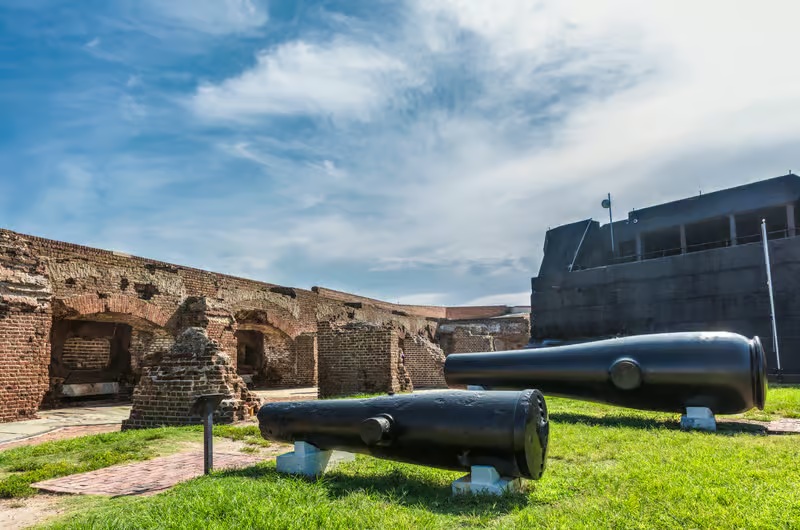
1. Fort Sumter National Monument
Fort Sumter is where the Civil War began. On April 12, 1861, Confederate forces opened fire on the Union garrison stationed in Charleston Harbor after a 34-hour bombardment, triggering four years of conflict that changed the country. The fort sits on an artificial island built on what was originally a sandbar, designed to hold 650 soldiers and 135 guns.
You reach it by ferry from Liberty Square in downtown Charleston. The fort itself has no entrance fee. Ferry tickets run around $30 for adults and $18 for children as of 2026. The round trip takes about two hours including one hour at the fort. National Park Service rangers give talks throughout the day that put the site in context far better than reading a plaque ever would.

2. Rainbow Row on East Bay Street
Rainbow Row is a row of 13 Georgian townhouses built between 1748 and 1845, painted in pale pinks, yellows, and greens along East Bay Street. It is the longest row of Georgian row houses in the United States and one of the most photographed streets in the country.
The pastel colors date to the Charleston preservation movement that began in the 1920s, not the colonial era as most people assume. Originally the buildings served as merchant shops on the ground floor with residences above. Go before 9am. By mid-morning tour groups arrive and the street loses its quiet quality entirely.

3. White Point Garden
White Point Garden sits at the southern tip of the Charleston peninsula where the Ashley and Cooper rivers meet the harbor. The park is free, shaded by massive live oak trees draped in Spanish moss, and looks directly across the water toward Fort Sumter. Old cannons, military statues, and paved paths run through the grounds.
The antebellum homes lining the street behind the garden are some of the finest in the city. A slow walk through here on a clear morning is one of the better free hours you will spend in Charleston SC.

4. Drayton Hall Plantation
Built in 1738 on the Ashley River, Drayton Hall is the oldest unrestored plantation house in America still open to the public. It is the earliest example of fully executed Palladian architecture in the country and survived both the Revolutionary War and the Civil War without being modernized or renovated.
The tours walk through the main house and address the history of the enslaved people who worked the property in detail and directly. If you visit one plantation near Charleston, make it this one.

5. Visit Middleton Place Gardens
Designed in 1741, Middleton Place has the oldest formally landscaped gardens in the United States. A signer of the Declaration of Independence lived here. The terraced lawns, butterfly lakes, and position on the Ashley River give the property a scale that photographs consistently underrepresent.
Eliza’s Freedman Cottage on the grounds covers the history of the enslaved and freed people who lived and worked at Middleton Place across generations. The azalea bloom in late March and early April makes this the single best time to visit the property.
6. Take a Horse-Drawn Carriage Tour
A horse-drawn carriage tour through the Charleston Historic District is one of the most practical ways to get oriented on a first visit. Guides cover Rainbow Row, the Battery, the Four Corners of Law, St. Philip’s Church, and the antebellum homes of South of Broad in about an hour.
Palmetto Carriage Tours is the oldest carriage company in Charleston and departs from the market area. Tours run daily and cost around $30 per adult. Book in advance in spring and summer when slots fill quickly.

7. Spend a Day at Folly Beach
Folly Beach is twelve miles from downtown Charleston and the closest Atlantic beach to the city. It is a relaxed, unpretentious beach town with a long pier, surf rentals, and a straight stretch of South Carolina coastline.
Morris Island Lighthouse, built in 1876, stands offshore and is visible from the beach. At low tide you can wade partway toward it. Kayak tours from local outfitters take you closer. The drive from downtown takes about 25 minutes and parking at Folly Beach County Park costs around $20 per day in peak season.

8. Walk Through the Charleston City Market
The Charleston City Market has operated continuously since the 1790s and is one of the oldest public markets in the United States. Four covered blocks run through the historic district and hold food vendors, local produce, craftspeople, and Gullah Geechee sweetgrass basket weavers whose tradition has been practiced in the South Carolina Lowcountry for over three hundred years.
The market is free to walk through and open daily. It is a good stop for local food, handmade goods, and understanding a piece of Charleston life that has been running longer than the country has existed.

9. Walk the College of Charleston Campus
Founded in 1770, the College of Charleston is one of the oldest colleges in the United States and sits directly inside the historic district. The campus is not separated from the city. It is part of it. Greek Revival buildings, brick walkways, and live oak trees line the grounds throughout.
Entry is free and open to the public. The Cistern Yard at the center of campus is the most photographed spot on the grounds and has hosted commencement ceremonies since the 1800s. A walk through takes about 45 minutes and costs nothing. If you are already on King Street or heading toward the Battery, the campus sits directly in between and is worth the stop.

10. Visit the International African American Museum
Opened in 2023 on the site of Gadsden’s Wharf, this is the most historically significant new museum in Charleston. Gadsden’s Wharf was the arrival point for an estimated 40 percent of all enslaved Africans brought to North America. The museum sits on that ground deliberately, and the weight of the location is present throughout the visit.
The building, exhibits, and Center for Family History make this one of the most important things to do in Charleston SC for any traveler who wants to understand the city beyond its pretty streets.
Frequently Asked Questions
What is the best time to visit Charleston SC?
Late March through May is considered the best time to visit Charleston. The azaleas bloom across the plantation gardens, temperatures remain comfortable for walking, and crowds are lighter than in peak summer. September and October are also excellent months to visit.
How many days do you need for things to do in Charleston SC?
Three days is enough to experience Charleston’s major landmarks and restaurants. Four to five days allows extra time for plantation visits, beach trips, and exploring neighborhoods beyond the historic district.
Is Charleston SC expensive to visit?
Charleston can be affordable depending on your travel style. Attractions like Fort Sumter, White Point Garden, the City Market, and the historic district are free or inexpensive. Plantation admissions typically cost around $25–$30 per adult, while dining ranges from budget-friendly to upscale.
Final Word
The things to do in Charleston SC are not the kind that check a box and move on. Fort Sumter stays with you. The quiet of Rainbow Row at 8am stays with you. The shrimp and grits at a good restaurant stays with you. Charleston is one of those cities that rewards the traveler who slows down, looks properly, and gives it the time it has spent 350 years earning.


No Comments